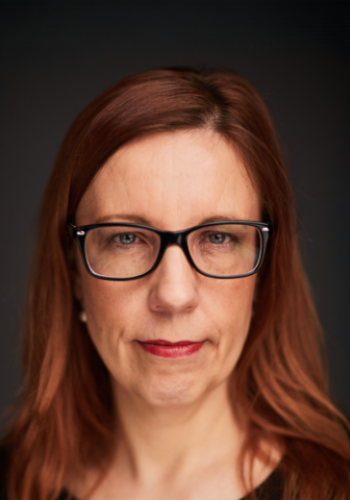
How do you connect healthcare data across hospitals and countries? Martin Zubek of InterSystems for Central Europe summarized a 30‑year journey from a clinical portal at IKEM in Prague to today’s platforms that consolidate data and help physicians. In focus are standards, regional solutions, and a clinical viewer with large language model support.
Standards that enable collaboration
The foundation of connected healthcare is interoperability—the ability of systems to exchange data safely and meaningfully. A key role is played by the methodologies of the Integrating the Healthcare Enterprise (IHE) organization and data standards, especially HL7 FHIR. These tools are also important for cross-border exchange of medical documentation in the European Union. The emerging European Health Data Space (EHDS) is built on consolidated data intended not only for sharing but also for supporting decision-making in clinical practice.
Consolidated data and a clinical viewer in practice
In the Czech Republic, the HealthShare Unified Care Record product has been deployed in several teaching hospitals, for example in Brno–Bohunice, at Bulovka, in Královské Vinohrady, and most recently also at St. Anne’s University Hospital in Brno. In Slovakia, InterSystems technologies serve as a base layer, for example for the electronic prescribing of the health insurer Dôvera, as well as in the Medirex laboratory chain. The goal is a unified view of the patient across departments and regions so that clinicians have the necessary information immediately at hand. Such consolidation saves time, reduces duplication, and increases the safety of care.
Part of the solution is a clinical viewer that displays data from various sources and adds decision-support mechanisms. It uses large language models, for example from OpenAI or Anthropic, to contextually select for the clinician, within the security model, the most important information from the multitude of records. This is a practical demonstration of how data integration becomes a tool for quickly understanding the clinical situation. The physician thus does not have to go through dozens of documents and can focus on the patient.