Long-term care is not a single service or a building, but an interconnected system that must function as a whole. Experience from practice, education, and standard-setting shows that its core is the person and simple expectations: safety, dignity, and respect. Europe meanwhile faces an aging population, a shortage of professionals, and financial pressure – and that is precisely why new frameworks of quality and sustainability are emerging.
Long-term care as a system
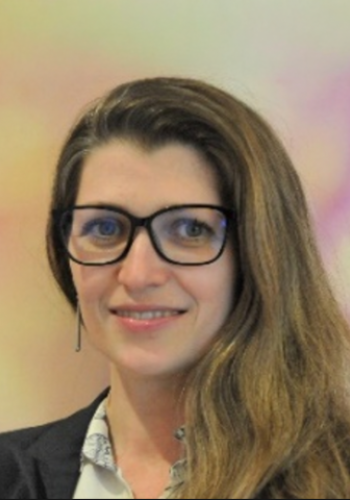
The author, with more than 25 years of experience, bears daily responsibility for quality, services, clients, and employees. She has looked at care from multiple perspectives: as a provider in facilities and in the field, an educator and lecturer, and a co-author of solutions at the system level. The key finding is clear: long-term care is a system that must be aligned; otherwise it fragments into isolated services. At its center must remain the person – older, seriously ill, or incapacitated – with the basic expectations of safety, dignity, and respect.
From standards to data: the Slovak experience
The creation of national standard nursing procedures was a multi-year, systematic, evidence-based process. Together with Alena Mochnáčová, she initiated the introduction of reimbursement for nursing care in social services facilities in 2018. Today this mechanism is being fine-tuned so that it is not only a stabilizing element but also a tool for quality. In parallel, effective digital tools are emerging for managing the nursing process and quality, because without data, quality cannot be managed.
European challenges and new cooperation frameworks
Across Europe, the pressure is mounting: an older population, more complex needs, workforce shortages, and rising costs. As a result, systems often end up putting out fires rather than developing services. The current discussion, however, shifts the lens: long-term care is not a marginal social service, but a public good and the infrastructure of aging societies. Investments bring the so-called care dividend – they reduce pressure on healthcare, support the economic activity of families, and strengthen intergenerational solidarity; the real cost is inaction.
The biggest bottleneck is not buildings or technologies, but people, without whom it is impossible to grow or raise quality. That is also why an independent professional and innovation initiative, Europ, arose in Slovakia, aiming for a practical, implementable, and technology-supported European framework for quality and sustainability. The first step is the European Care Founding Forum: a working meeting where practice, policy, and research are connected and the pillars of financing, workforce, and innovation are discussed. Participants are co-creators – in an open workshop they share experiences, obstacles, and solutions so that a European Care Framework usable across countries can emerge.