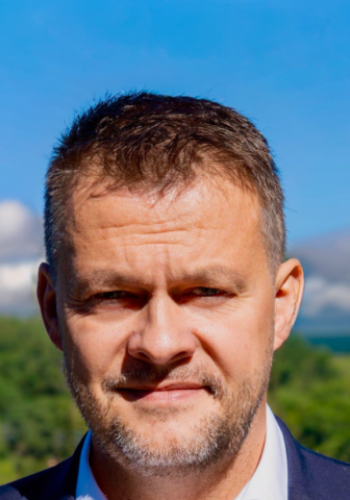
At ITAPA, the Minister for Investments, Regional Development and Informatization shared a personal experience with a hospital and his vision of how digitization should ease the burden on healthcare workers. He emphasized the need for a single responsible institution for state IT to avoid wasting money on duplications. In his view, artificial intelligence should handle routine tasks, but humans should still make the decisions.
From patient to a vision for healthcare
The minister admitted that a recent hospitalization gave him a direct look at how healthcare operates. He highlighted the East Slovak Institute of Cardiovascular Diseases as an example of a top-tier facility where good equipment, quality staff, and dignified working conditions come together. In his words, every hospital in Slovakia deserves such a standard.
The discussion also touched on the organizational form of hospitals, with the minister mentioning the joint-stock company model as one possible path. He also pointed out that success does not rest only on salaries, but on the overall conditions in which healthcare workers operate. He sees patient ratings as important feedback that shows where it makes sense to focus.
Digitization that saves doctors time
A concrete picture came from a scene in the intensive care unit: after rounds, the head physician spent hours entering data into the system. The minister argues that this is a space for technologies that already exist and there is no need to “reinvent the wheel.” Routine tasks – for example, the preliminary evaluation of lab results – can be done by artificial intelligence, while the doctor reviews the outcome and decides.
Such a setup would relieve healthcare workers of administrative burdens and give them more time for patients. According to the minister, digitization makes sense in every segment, but it must be well thought out and user-friendly. In other words: technology should serve people, not add more “clicking.”
One roof for state IT, fewer duplications
According to the minister, the Ministry of Informatization is not supposed to build hospitals or schools, but to bear responsibility for state IT and its coordination. He criticized the practice of individual departments developing their own applications without a shared overview, which leads to duplications and unnecessary waste. In a time of consolidating public finances, he says it is crucial to spend European funds purposefully, reuse existing solutions, and prevent parallel projects.
Cooperation between the public and private sectors should be a matter of course. The minister also recalled the view that Slovakia could “skip” part of the digitization phase and integrate AI more quickly where it makes sense. However, he warned against the illusion that large investments automatically mean “Silicon Valley” – without unified governance and shared solutions, the results will not follow.