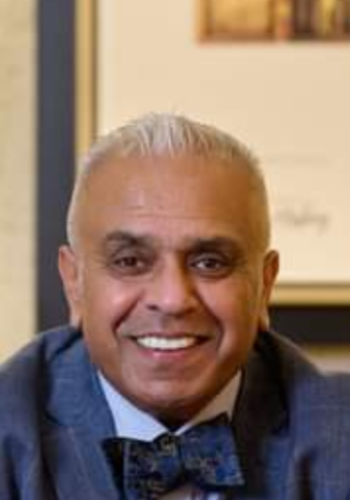
Mathematician and former investment banker Christian Kumar has linked his personal journey with the history of venture capital and the practice of building companies. He argues that the problem today is not a lack of money, but global competition and the speed of information. He advises founders to understand finance, guard against bad terms, and look for capital where there is demand for their solutions.
From Derivatives to Founding Companies
Kumar started as a mathematician in the United States, where he created a derivative for WTI crude oil and spent fifteen years learning sales, negotiation, and how a bank operates “from the ground up.” In 2000 he moved to Europe and started his own business at a time when it was easier to obtain bank loans. Based on a mathematical model, he built a company that by 2007 had grown to £4.5 billion and 800 people. He emphasizes that the key was not genius, but a rigorous plan.
Since 2011 he has invested mainly in Central and Eastern Europe, and approximately 70% of his portfolio spans from the Baltics to the Balkans. He praises founders in the region for their passion and commitment, but they often lack self-confidence. That is why he runs venture builders in the United Kingdom (with a partnership in healthcare), Italy, and Greece, and is preparing another in Poland. Their role is to protect founders from unfair terms and help them grow.
How Venture Capital Emerged and Grew
One of the first modern VC deals is considered to be American Research and Development’s investment in Digital Equipment Corporation in 1958: $70,000 and a $2 million loan in exchange for a large stake. Capital followed universities and research on both the East and West Coasts of the United States. The government supported risk investments through small-business legislation, by lowering the capital gains tax, and by allowing pensions to flow into funds. This created space for faster growth of technology companies.
In the 1990s, the NASDAQ capital market opened doors for smaller companies, and IPOs became a more accessible route to funding. After 2000, the internet accelerated the flow of information and equalized return expectations between Boston and Bratislava, which gave rise to sovereign funds and family offices in tax-efficient centers. Investors began chasing multiple returns and “unicorns,” but according to Kumar, competition today is a bigger problem than capital itself. He therefore warns that those who do not understand finance can easily lose control of their own company.
Today’s Priorities and Advice for Founders
Artificial intelligence is not a cure-all if it does not address a clear market need; blockchain fads and NFTs fared similarly. The areas that make sense are those with demand: healthcare with digitization, telemedicine, and remote rehabilitation, or prevention instead of overcrowded hospitals. The energy sector and climate are back in the spotlight after the price swings linked to the war in Ukraine. Fintech and “as a service” models remain steady classics—from software to medical and rehabilitation services.
When designing a business, start from a specific problem and demand, and build unit economics that an investor can easily calculate. Do not let geography limit you: look for capital beyond neighboring countries, for example in Africa or Latin America. A strong, demand-driven product and predictable numbers are the best defense against unfavorable terms. And if you have doubts, surround yourself with people who will protect you in time from “vulture” capital.