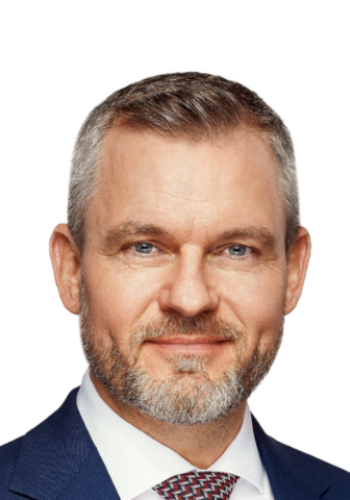
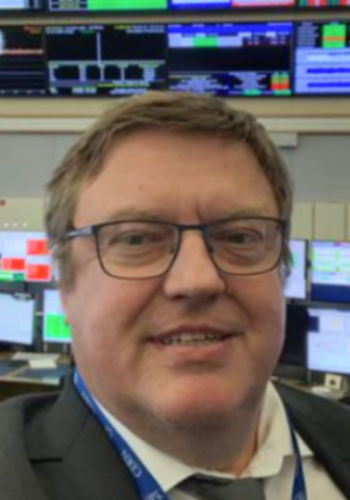
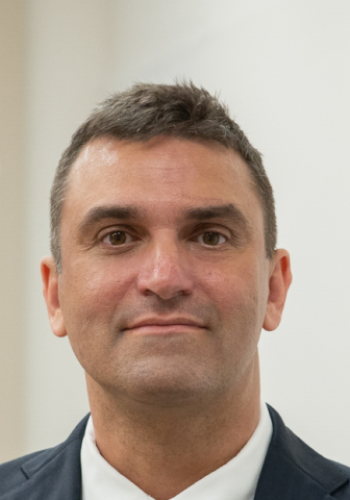
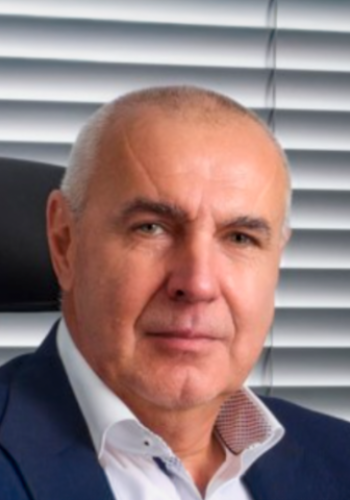
In the discussion between President Peter Pellegrini and physicist Peter Chochula, CERN became a model for how Europe can grasp the era of artificial intelligence: through a large, open, and sustainable project. The key is collaboration, access to infrastructure, and outcomes for the public, not concentration in the hands of a few companies. Slovakia sees an opportunity in stable energy, talent, and the rapid implementation of ready-made solutions.
CERN as a model: cooperation, openness, and benefits
CERN grew out of the post-war need for cooperation and quickly understood that major discoveries require large projects and international teams. The openness of the results, however, also brought "side" benefits: from the web to positron emission tomography to processing massive data. Artificial intelligence is used here in practical ways – for example, in the UNOSAT project to predict humanitarian crises or in the analysis of brain CT scans to detect the risk of cerebrovascular events. Trust is built through clear rules, agreements, and data security.
CERN is also developing platforms that combine openness with privacy protection, such as the distributed system "Cafeín", where models are trained without data leaving its owner – useful for hospitals. The discussion also recalled the Slovak industrial contribution: magnets labeled "made in Slovakia" and robotic devices positioned with precision down to the thickness of a hair. Most of the value arises precisely from the synergies of hundreds of institutes that, after competition, ultimately combine results.
An open European AI hub and Slovakia's role
The two speakers supported the idea of an "AI CERN": a European hub that would stand out through openness, access to infrastructure, and a public-interest focus. This would ease concerns about the concentration of power in a few global companies and make it easier for smaller players to test ideas. Such a project, however, needs enormous and stable power capacity, as demand for compute is growing. Slovakia emphasized its advantage in nuclear sources and 24/7 stable, low-carbon electricity suitable for data centers.
Europe should also bet on specialization – for example, in healthcare or the environment, where it holds rich, digitized data, if it can be safely aggregated. A critical mass of people and a common goal can create an effective lever against scattered, parallel efforts. Slovakia can contribute infrastructure and people, if they are given room at home and the brain drain is reduced. Access to the hub and to technologies should be broad, with an emphasis on security and clear sharing rules.
Obstacles and next steps
Europe's biggest weakness is capital infrastructure and political will in a time of wars and fragmented interests. The mere choice of location would trigger a clash of national priorities, yet CERN's experience shows that large projects need not be prohibitively expensive. Overregulation and a fragmented market are also problems, with a lack of venture capital pushing startups across the ocean. Even so, a European project can be built if it rests on cooperation, openness, security, and long-term funding.
Alongside grand visions, the implementation of existing solutions should not be halted – this is precisely where small Slovakia can stand out with speed and courage. The modernization of industry, public administration, and healthcare should happen now, with an eye to scaling beyond "pilots". The discussants called for better access to capital, acceptance of failure as part of innovation, and the creation of a more unified ecosystem. Over a 6–12 month horizon, they recommend clearly defining a common goal and building broad societal consensus around it.