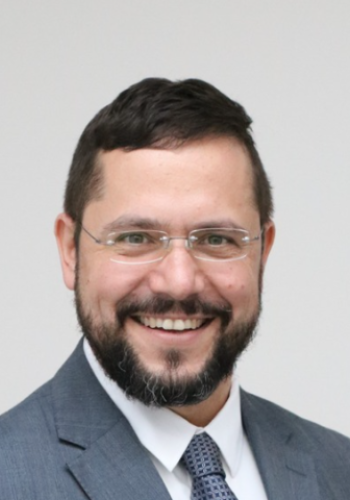
Quantum technologies, artificial intelligence, and the question of regulation are driving cybersecurity today. The dean of FIIT STU, Ivan Kotuliak, discussed where research in Slovakia stands and what awaits us in the coming years. The message is clear: innovate quickly, regulate wisely, and start preparing for the post-quantum era now.
Quantum: keys first, then computing
In security today, quantum communication is more interesting than quantum computing itself. Transmitting keys via entangled photons promises that eavesdropping will be detectable, and the ensuing traffic encrypted more resiliently than before. That is why experiments linking a satellite and Earth, which have already been demonstrated, have attracted attention.
Quantum computing, however, is approaching an inflection point according to experts. Capacities are increasing, new algorithms are emerging, and the first practical benefits are expected especially for large artificial intelligence systems – including significant energy savings. Their deployment will likely be centralized in the form of a "quantum cloud", similar to how we use large language models today.
Innovation and regulation: let's not tie defenders' hands
The debate on regulation often gets ahead of practice itself, a common reflex in Europe. The law should naturally respond to reality, but if we set rules before we understand the technology, we may hinder our own competitiveness. The fundamental problem is also the asymmetry: nobody regulates attackers, while defenders face more and more restrictions.
Academic research, meanwhile, needs the freedom to try new approaches – within legal frameworks, but with room that translates into industrial practice only later. Experts therefore advocate the following sequence: first develop and validate the technology, then sensibly adjust its use. In cybersecurity, too, the approach should above all be adaptive: learn from experience and flexibly turn it into effective measures.
Slovak research, practice, and careers in the AI era
In Slovakia, results are emerging mainly in strong academic centers, with FIIT STU emphasizing collaboration with industry. More than half of thesis topics come from companies or state institutions, including security authorities, which often leads to subsequent employment. Research, however, needs people with curiosity and the courage to question established truths, not just applicants for a "good position".
According to experts, AI will mainly replace routine, junior roles, while top specialists will gain more powerful tools and higher efficiency. The challenge will be where to train future seniors, as the natural "springboard" is weakening – making the connection between schools and practice all the more important. From a technology standpoint, it is time to move to post-quantum ciphers, which are already officially recommended and should be deployed gradually. What can be done in security today, let's not leave until tomorrow.