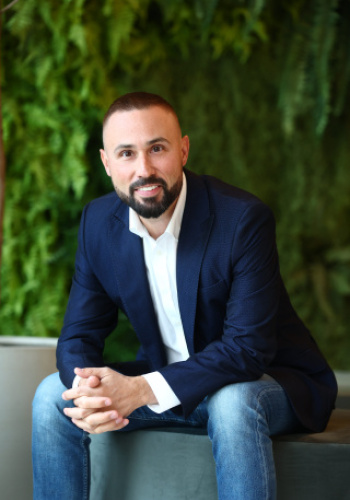
Entrepreneur, investor, and philanthropist Milan Dubec spoke at Slovakia’s largest technology conference about what makes the country a modern place to live. He argues that without community, openness, and personal initiative, technology is not enough. He illustrated his observations with personal and business stories.
Modernity as a magnet: stories of departure and return
Dubec sees the country primarily as a place for people, not as an "information system." Through the story of his sister-in-law, who left Púchov with her family for Britain and eventually lives in Greece, he shows that people choose to live where they find community, peace, and job opportunities. With EU accession, he says, Slovakia lost its monopoly on its citizens and therefore has to work as a natural magnet—not only through e-services, but above all through quality of life. He also notes that the number of Slovaks abroad is talked about in the hundreds of thousands, while at home there remains a closed attitude toward immigration that could make up for the shortfall.
When the state falls behind, community and private initiative step in
After years of traveling between Žilina and Bratislava, Dubec realized that waiting for the state is pointless. He therefore decided to start with himself: in Žilina he is building modern office buildings and apartments so that high-quality work environments do not arise only in the capital. The goal is to give people the infrastructure in which they want to work and stay.
But community is made not just by offices, but by a sense of belonging. Dubec therefore set up a foundation that distributes small grants in Žilina—from hundreds of euros up to 10 000 euros for the regional library—and thereby kick-starts projects into which volunteers put time and enthusiasm. He says it is precisely the combination of small amounts of money and great energy that transforms neighborhoods faster than public administration can manage, and by example motivates other entrepreneurs to join in.
Young people, languages, innovation: what will decide the future
Slovakia is aging and there is no quick fix, Dubec notes. What we can influence is the departure and arrival of young people—and for that you need an environment in which they want to stay. In secondary schools he sees that up to three quarters of students are considering going abroad, so he emphasizes good English and an education that opens doors to the world and will one day allow them to bring their experience back home.
He sees the next challenge as the automation of shared service and call centers by artificial intelligence and the need for educated people to find new roles. At the same time, industry reports a shortage of workers; according to Dubec, the prime minister mentioned in Serbia the need for tens of thousands of additional workers in the coming years. The ideal answer is to make Slovakia a modern, open country that people from outside will want to come to—otherwise we will struggle to compete with places where the lifestyle is more attractive.