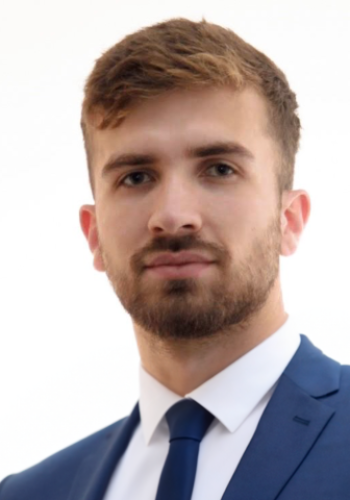
A group of young Slovaks wants to bring home the Danish and Dutch way of rapidly developing medical AI tools directly inside hospitals. Their goal is to connect theoretical research with everyday practice in radiology, pathology, and radiation oncology. The idea arose from firsthand experience with the operation of clinics and research institutions abroad.
From an idea abroad to a bridge for Slovakia
Denis, a Slovak medical student, left after his studies to work at the department of radiation oncology at a hospital in Copenhagen, where he gained top‑tier know‑how. It was there that the idea was born to found a startup that would accelerate the journey of AI tools from a laboratory concept to clinical use. According to the team, Slovakia offers strong research‑and‑development potential, which, however, needs to be reinforced through better ties with practice. Therefore, they want to adopt the best of the agile way of working at Danish and Dutch institutions.
The team consists of Denis, his classmate Jason from UMC Utrecht, and Tomáš, who serves as a co‑founder. Together they want to create a "bridge" between academic research and the needs of clinics. The key is to develop and test tools quickly and safely for internal use, without a long and costly commercialization process.
Where AI helps physicians
In radiology it is mainly about detecting small lesions and microfractures, with an emphasis on sensitivity and consistency of assessment. In pathology the team relies on the principles of digital pathology, which speed up slide review and support more objective decision‑making. In radiation oncology, segmentation of organs at risk is key to making radiation planning more precise and sparing. Predictive models in radiotherapy are also being developed, which Denis is actively working on as part of his doctoral project.
Technical tasks include image registration and analysis of three‑dimensional data. The team has worked on projects detecting metastases in breast cancer and in lymphomas, as well as on segmentation of anatomical structures needed for treatment planning. One can also mention tools for the detection and segmentation of brain tumors or oncologic findings in the prostate. The goal is to unify these approaches into practical aids that save doctors time and enhance the quality of decision‑making.
Rapid development and a call for collaboration
Their workflow covers the entire chain: data collection and cleaning, selection of a suitable architecture, training and validation, all the way to deployment into the user interface. In parallel they are building a solid technical foundation and preparing publications so that development is transparent and verifiable. Because technological progress is rapid, products are often outdated by the time they reach commercial release. Therefore, they advocate a model in which hospitals develop and use state‑of‑the‑art tools internally and in an agile manner.
The company calls on hospitals, clinics, and universities to collaborate in order to share capacity in research and development of AI in medicine. Physicians can participate in creating models tailored to the needs of a specific workplace and deploy them quickly into practice. Convolutional neural networks dominate current trends, but the team is also testing transformers for medical images. For financial reasons they prefer projects with grant potential, and they have already prepared a demonstration detection model that can be integrated via an API.