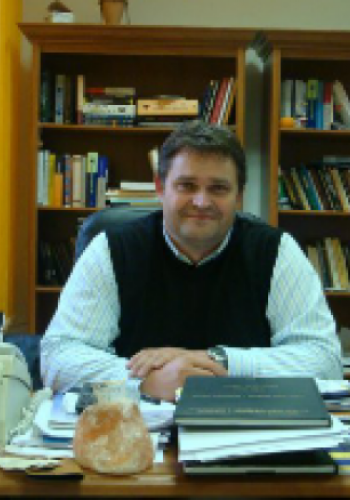
Peter Sinčák
Technical University of Kosice
Prof. Peter Sinčák works as the head of the Department of Cybernetics and Artificial Intelligence and his main area of interest is artificial intelligence and social robotics. He collaborates with foreign experts in this field, including the USA, the EU and Asia. Prof. Sinčák was a trainer of several PhD students who successfully completed their…
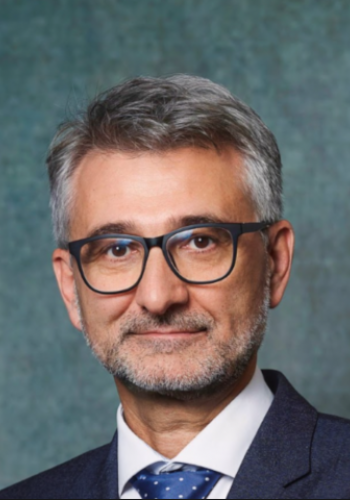
Vladimír Šucha
European University Institute
From 2002 to 2004, he served as the Head of the European Commission Representation in the Slovak Republic. Starting in 2012, he took on the role of Director of the Joint Research Centre, which is the European Commission's scientific and knowledge service. Prior to that, he spent six years as a Director at the European Commission's Directorate-Ge…

Gabriel Galgóci
The Ministry of Health of the Slovak Republic
For more than two decades he was working for the multinational company AT&T. Since October 2024, he has been serving as an advisor to the Minister of Health of Slovak Republic. He is the chairman of the Business Service Center Forum (BSCF), which unites and represents three dozen service and outsourcing centers in Slovakia. BSCF is part of the A…
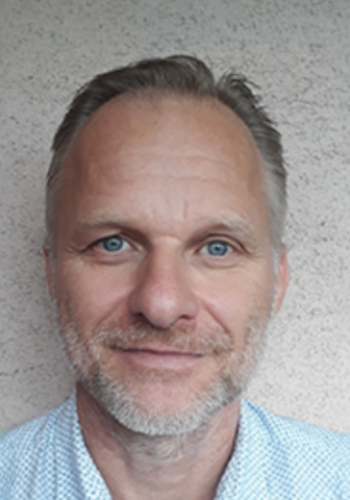
Igor Farkaš
Faculty of Mathematics, Physics, and Informatics at Comenius University in Bratislava
He works as a professor and Deputy Head of the Department of Applied Informatics at the Faculty of Mathematics, Physics and Informatics of Comenius University in Bratislava. His professional focus is on artificial intelligence (artificial neural networks) and cognitive robotics. He has long been engaged in research on the computational propertie…
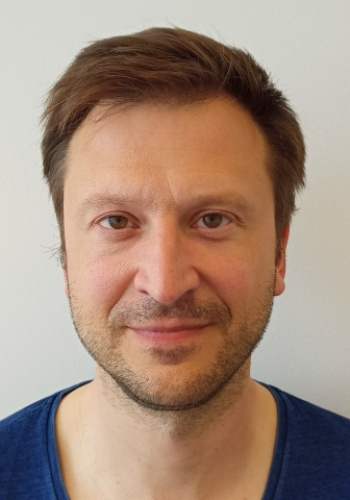
Juraj Čorba
Ministry of investments, regional development and informatization, SR
Juraj Čorba has been working at the Digital Agenda Section of MIRRI SR (Artificial Intelligence Agenda) since 2021. He is a former representative of the Slovak Republic before the EU courts and a lawyer. Author of the script of an experimental graphic novel dealing with the moral and professional challenges associated with the advent of artifici…
Recommendation speakers
Vladimír Šucha
European University Institute
Juraj Čorba
Ministry of investments, regional development and informatization, SR
Igor Farkaš
Faculty of Mathematics, Physics, and Informatics at Comenius University in Bratislava
Gabriel Galgóci
The Ministry of Health of the Slovak Republic