Program - Autumn ITAPA 2026
The future of digital government, AI strategy, public services and decisions shaping Slovakia.
AI and digital transformation in action. Proven solutions, real-world projects and live technology demonstrations.
Hands-on workshops on AI agents, automation and digital tools for public administration.
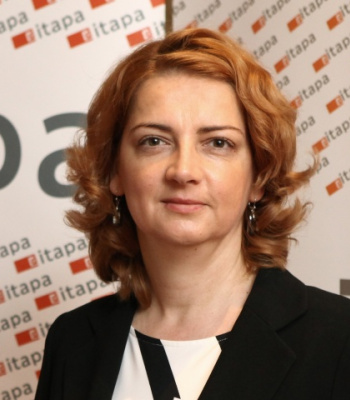
A discussion on investment in infrastructure, public services, digitalisation and innovation that can strengthen regional competitiveness and create the conditions for people to stay and build their future in the regions.
Based on data from local authorities, the Smart Cities Klub will show what currently prevents cities and municipalities from adopting innovation most effectively.
Why are some companies able to turn technological change into growth while others fall behind? Is success driven by technology and AI, talent, corporate culture or the courage to challenge established ways of working? Leaders from major companies will share first-hand insights into the decisions that changed the direction of their businesses and what truly works in practice.
Slovakia is entering the next phase of artificial intelligence development – moving from strategy to real-world deployment across public administration, business and industry. The panel will bring together government, the technology sector and industry to explore where AI can create the greatest value, what conditions are needed to accelerate its adoption, and which concrete steps could move Slovakia forward in the coming years.
Martin Albrecht, SoftwareOne
At Autumn ITAPA, we will build on the use of AI assistants in public administration and move towards AI agents capable of independently taking over and carrying out entire steps within work processes. Through practical simulations, participants will explore how agents can work with public authority documents, automate freedom of information requests, monitor legislative changes and anonymise sensitive data in compliance with GDPR.
How can data from databases, maps and sensors be turned into real-world decision-making? The session will present projects showing how better-quality data can help government plan public services more effectively, manage territories and infrastructure, and target public policies more precisely.
The new Slovensko.sk promises simpler services and a better user experience. But is it merely a new portal, or the beginning of a deeper transformation of government digital services? What already works differently, and what still remains to be addressed?
How does a Slovak IT company win a strategic contract from the European Commission? SFÉRA will present the journey from securing the contract and understanding the needs of the European client to designing and delivering the solution. The case study will show what challenges the company had to overcome, how cooperation with the European Commission works, and how the resulting platform helps address Europe’s needs in the fields of energy and critical raw materials.
Slovakia is preparing for the next stage in the development of quantum technologies. What exactly do we want to build, what will quantum capabilities be used for, and who will use them? A discussion on how to move quantum technologies from research into real-world infrastructure for government and the economy.
Šimon Mičunek, Ministry of Investment, Regional Development and Informatization of the Slovak Republic
Peter Trajlinek, ARICOMA
Not visions or strategies, but systems that are already performing specific tasks today. The session will show where AI has already become part of the workflows of government and public institutions – what it does, what it saves, and where its limitations lie.
Erik Pavlovič, Salesforce
eApplications have shown that true digitalisation is not just about introducing a new electronic form, but about changing how the entire system works. Despite the challenges, they became the first fully operational life-event project delivered under the Recovery and Resilience Plan. What worked, what proved more difficult than expected, and what lessons can the rest of government take from this experience?
From Assembly Halls to a Knowledge Economy and Smart Industry
Slovakia has built its economic model on mass production with relatively low added value. This model is reaching its limits: labour productivity still lags 34% behind the EU-27 average, while the Slovak Academy of Sciences, in its Slovakia 2040 Vision, aims to narrow this gap significantly and reach at least 85% of the EU average. The way forward is a transition towards smart industrial production – robotics, interconnected digital production systems and the widespread integration of AI – combined with greater corporate investment in intangible assets such as software, data, and in-house research and development. These investments can help companies move higher up the global value chain. This transformation has already been partly foreshadowed by the shared services sector, which itself is increasingly exposed to the automation of routine tasks. However, without high-performance, widely available digital infrastructure capable of supporting these intelligent systems and data flows, alongside sufficient private-sector demand and favourable conditions created by the state, the transformation of Slovak industry – and of the economy as a whole – cannot truly take off.
How can the lifecycle of a digital service be managed as a single controlled and verifiable process? Take a closer look at the journey from preparing and testing changes through deployment, operational verification, analytics and audit reporting. Discover why test scenarios with semi-automated and fully automated execution are important. A unified approach can improve control over releases, quality and the operation of digital services.
How was the plan to digitalise 16 life events developed? The key decisions, the biggest challenges, and what would be done differently today when preparing one of the most ambitious reforms of Slovakia’s digital government.
Moderator: Lucia Kondáš
What do young people see differently in their surroundings compared with adults? Smart Cities Club will present the results of its work with pupils in four municipalities, followed by a live demonstration from pupils from Bratislava-Lamač, who will use Minecraft to show how they would redesign their local area. A practical example of how young people can be involved in shaping cities and public spaces.
Life events were intended to change the way citizens interact with the state – instead of dealing with individual authorities, they should be able to access a single service across different ministries and public institutions. What already works today, where have data and processes been successfully connected, and what still needs to be completed so that citizens can truly interact with one integrated state?
Moderator: Lucia Kondáš
Peter Marman, Ministry of Investment, Regional Development and Informatization of the Slovak Republic
Slovakia is deciding how to direct European investment over the next decade. Which areas will be prioritised – artificial intelligence, cybersecurity, government digital services or smart cities? Who will be able to access the new funding, and how should organisations prepare for it?
Ladislav Šimko, Ministry of Investment, Regional Development and Informatization of the Slovak Republic
Moderator: Lucia Kondáš
Peter Steinhübl, Slovensko.Digital
PARTNERS OF THE DIGI DAY